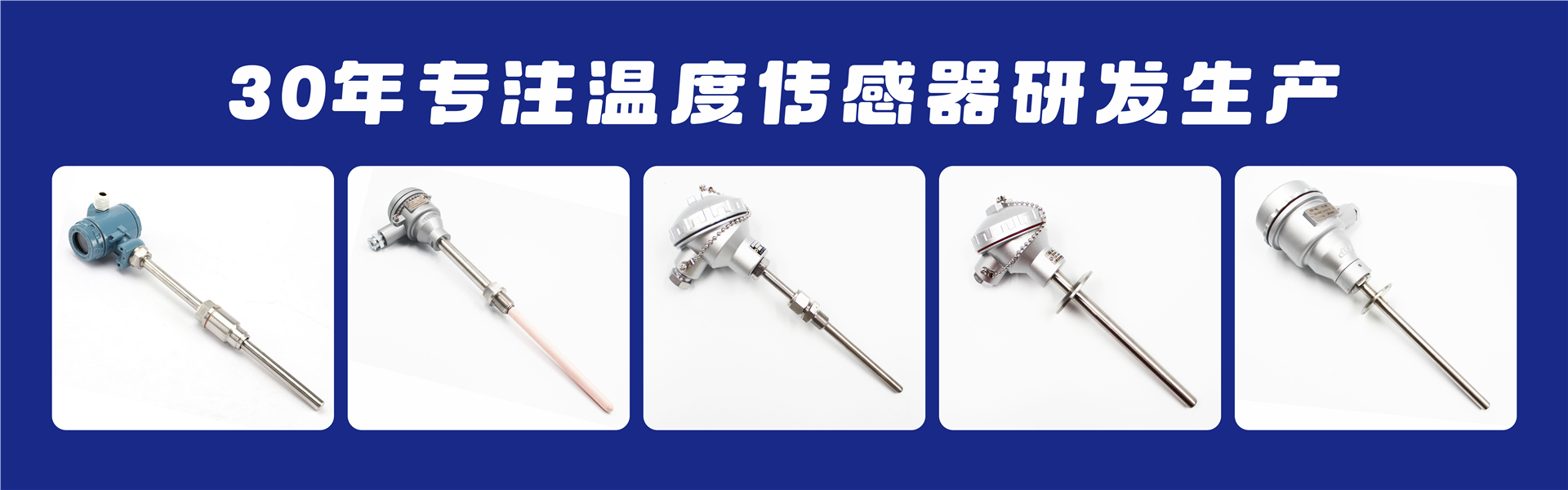
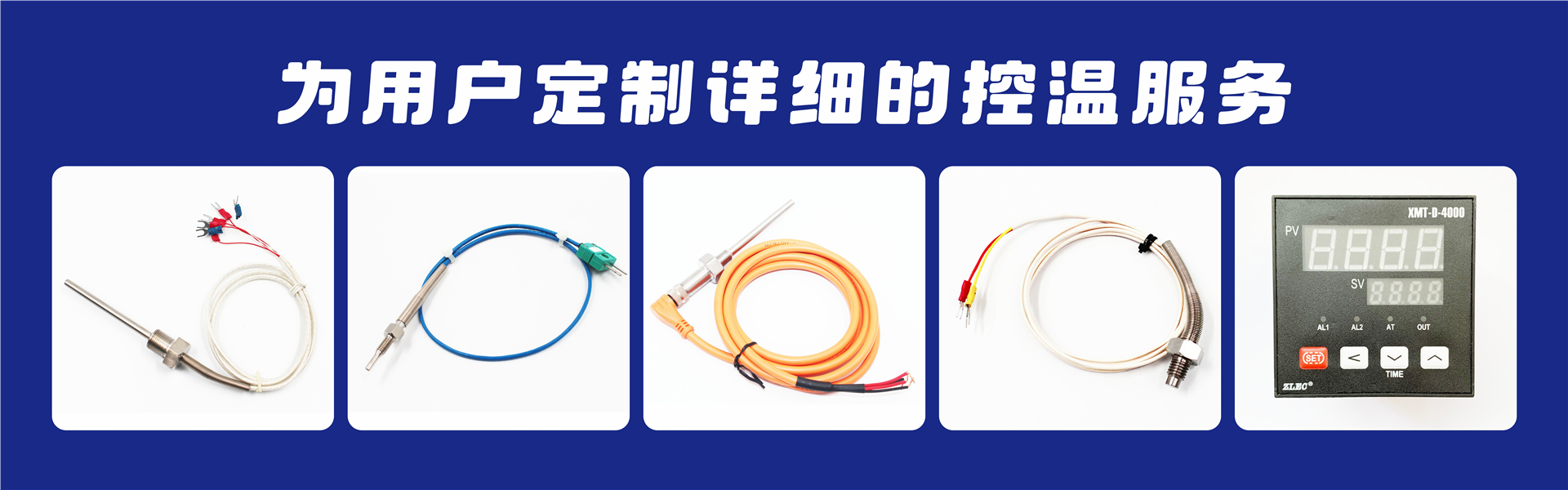
There are numerous types of thermocouples, including platinum-rhodium thermocouples, wear-resistant thermocouples, corrosion-resistant thermocouples, assembled thermocouples, K-type thermocouples, and sheathed thermocouples, among others. Among them, sheathed thermocouples are widely used in various industries. Do you all know what are the advantages of sheathed thermocouples? Let me introduce them in detail:
Armored thermocouples have advantages such as flexibility, high pressure resistance, fast thermal response time, and durability. Similar to assembled thermocouples, as sensors for measuring temperature, armored thermocouples are typically used in conjunction with display instruments, recorders, and electronic regulators. At the same time, armored thermocouples can also serve as temperature sensing elements for assembled thermocouples. Armored thermocouples can directly measure the temperature of liquid, steam, and gas media, as well as the surface temperature of solids, within the range of 0℃ to 1100℃ in various production processes.
The working principle of a sheathed thermocouple is that two conductors of different compositions are welded at both ends to form a loop. The direct temperature measurement end is called the working end, while the terminal end is called the cold end, also known as the reference end. When there is a temperature difference between the working end and the reference end, a thermal current will be generated in the loop. When a display instrument is connected, the instrument will indicate the corresponding temperature value of the thermoelectric potential generated by the thermocouple.
The thermoelectric potential of an armored thermocouple will increase as the temperature at the measuring end rises. The magnitude of the thermoelectric potential is solely related to the material of the thermocouple conductor and the temperature difference between its two ends, and is independent of the length and diameter of the thermocouple.
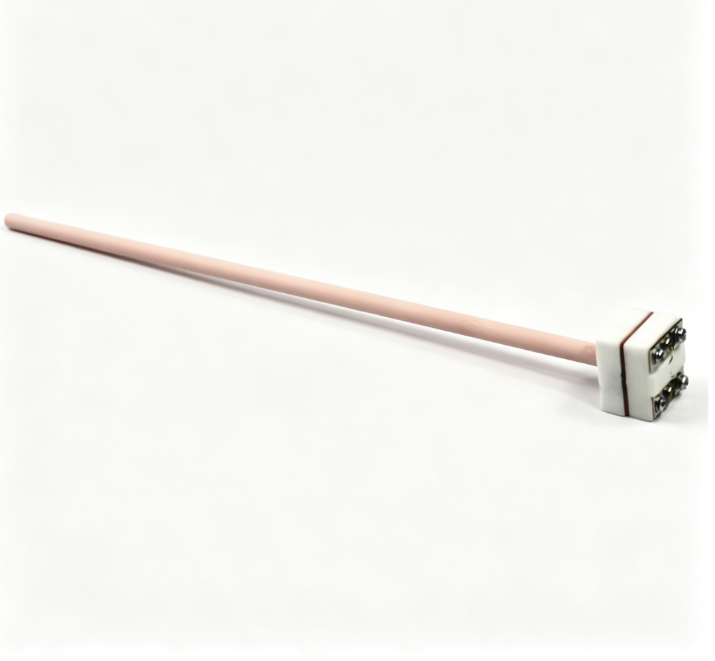
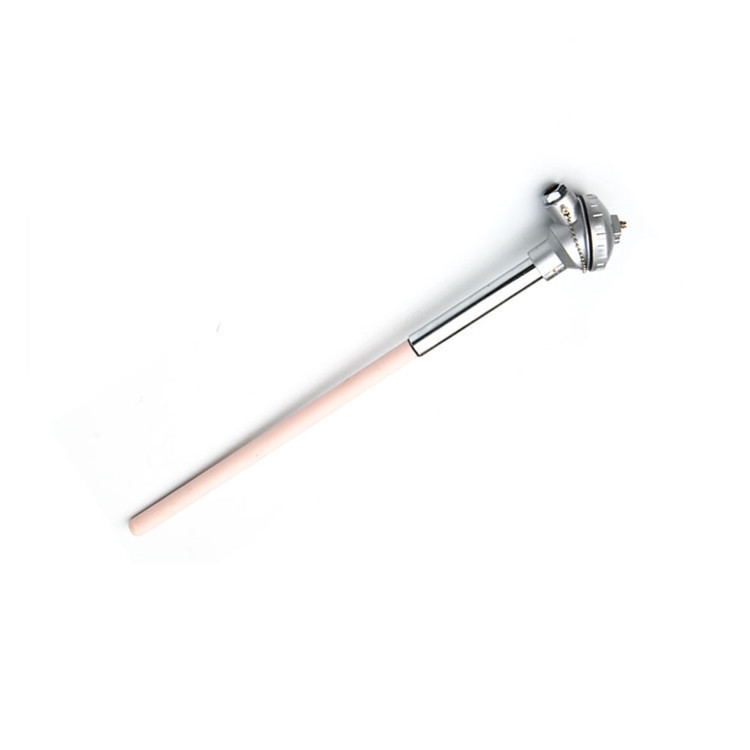
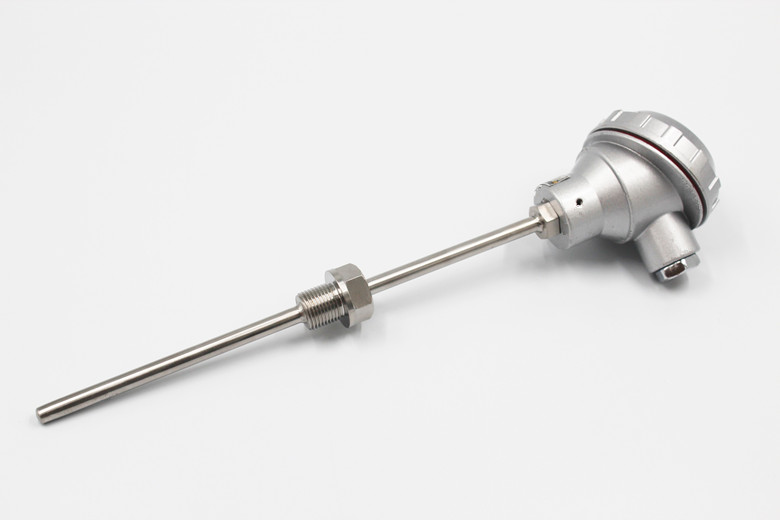
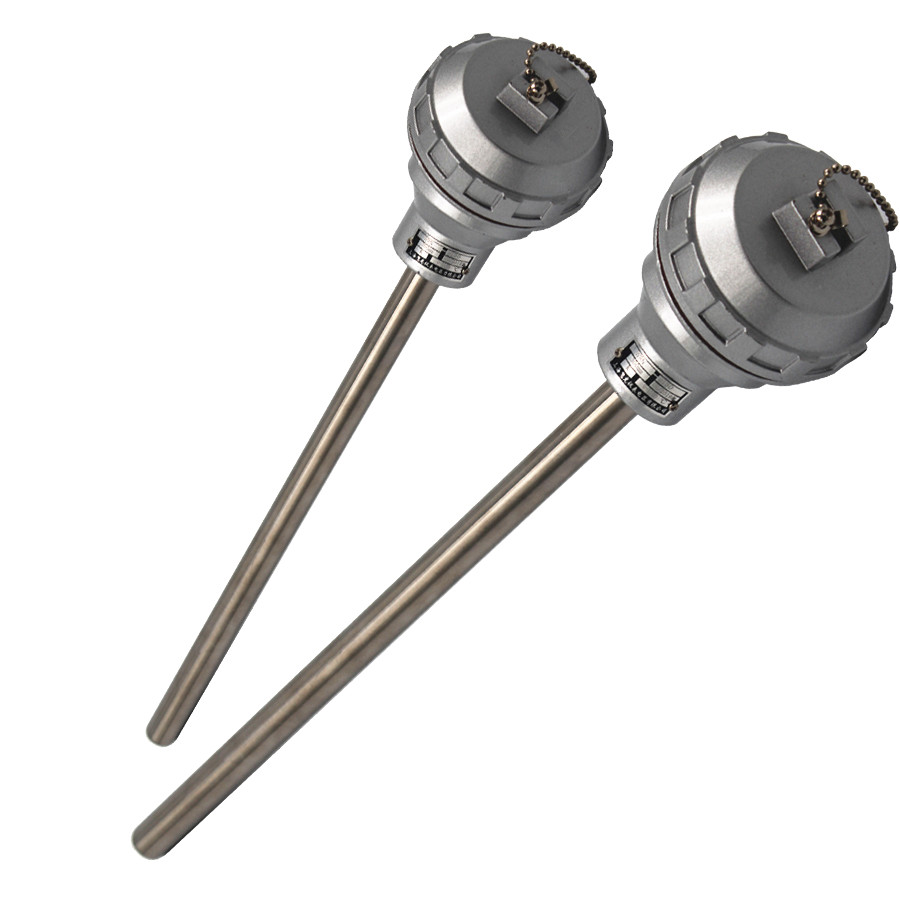
The armored thermocouple is made of a conductor, high-insulation magnesium oxide, and an outer protective tube made of 1Cr18Ni9Ti stainless steel, which are integrally drawn multiple times. The basic structure of an armored thermocouple product mainly consists of a junction box, terminal blocks, and an armored thermocouple, accompanied by various installation and fixing devices. There are also many types of thermocouples, such as platinum-rhodium thermocouples, wear-resistant thermocouples, corrosion-resistant thermocouples, assembled thermocouples, K-type thermocouples, armored thermocouples, and so on. Among them, the application range of armored thermocouples is also very wide, with applications in many industries. So, do you all know what are the advantages of armored thermocouples? Let me introduce them in detail for you:
Armored thermocouples have advantages such as flexibility, high pressure resistance, fast thermal response time, and durability. Similar to assembled thermocouples, as sensors for measuring temperature, armored thermocouples are usually used in conjunction with display instruments, recorders, and electronic regulators. At the same time, armored thermocouples can also serve as temperature sensing elements for assembled thermocouples. Armored thermocouples can directly measure the temperature of liquid, steam, and gas media as well as solid surfaces in various production processes within the range of 0℃ to 1100℃.
The working principle of a sheathed thermocouple is that two conductors of different compositions are welded at both ends to form a loop. The direct temperature measurement end is called the working end, and the terminal end is called the cold end, also known as the reference end. When there is a temperature difference between the working end and the reference end, a thermal current is generated in the loop. When a display instrument is connected, the instrument will indicate the corresponding temperature value of the thermoelectric potential generated by the thermocouple.
The thermoelectric potential of a sheathed thermocouple will increase as the temperature at the measuring end rises. The magnitude of the thermoelectric potential is solely related to the material of the thermocouple conductor and the temperature difference between its two ends, and is independent of the length and diameter of the thermocouple.
The armored thermocouple is made of a conductor, high-insulation magnesium oxide, and an outer protective tube made of 1Cr18Ni9Ti stainless steel, which are integrally drawn multiple times. The basic structure of the armored thermocouple product mainly consists of a junction box, terminal blocks, and the armored thermocouple, supplemented by various installation and fixing devices.
| Contact Us | ||
 |
 |
 |
| Tel | ||